The GARTEUR Action Group AD/AG-62 aims to strengthen Europe’s research capability in hydrogen-powered aviation by improving the understanding and numerical modelling of hydrogen combustion, safety and advanced propulsion concepts. Bringing together leading universities, research institutes and industry partners from across Europe, the action group AD/AG-62 will run from 2025 to 2027.
Hydrogen is widely recognised as a promising fuel for achieving the aviation sector’s long-term decarbonisation goals because it eliminates direct CO₂ emissions during combustion. However, significant challenges remain regarding combustion behaviour, pollutant formation, safety, and integration into future aircraft propulsion systems. The project therefore focuses on developing and validating advanced Computational Fluid Dynamics (CFD) tools capable of accurately predicting hydrogen-related flow and combustion phenomena.
Work Packages:
WP1 – FLAMES: Hydrogen and Hydrogen-Based Combustion
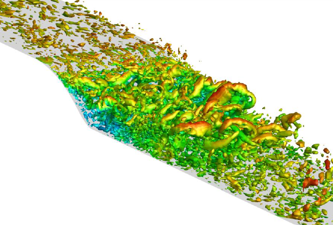
This work package focuses on the numerical modelling and experimental validation of hydrogen, hydrogen–ammonia and hydrogen–methane flames. The objective is to improve the prediction of flame behaviour, turbulence–chemistry interactions, combustion stability and pollutant formation, particularly NOx emissions.
WP2 – SAFE-LEAK: Hydrogen Leak Safety
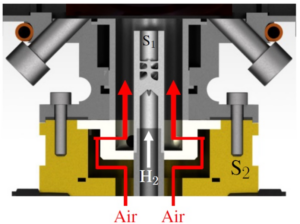
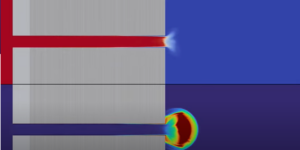
WP2 investigates the behaviour of cryogenic and high-pressure hydrogen leaks, including spontaneous ignition mechanisms, flame development and heat transfer effects. CFD simulations will be validated against experimental data to improve the safety assessment and design of future hydrogen fuel systems for aircraft.
WP3 – RDE: Rotating Detonation Engines
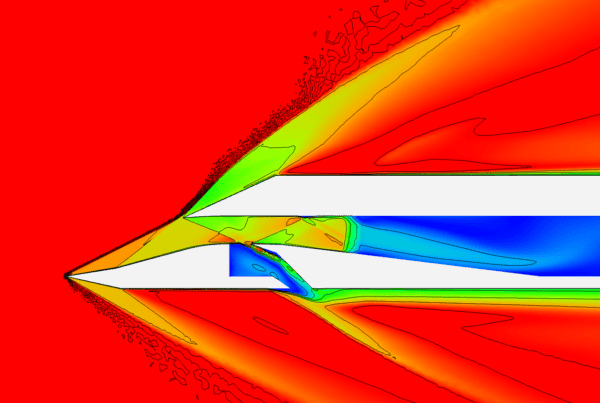
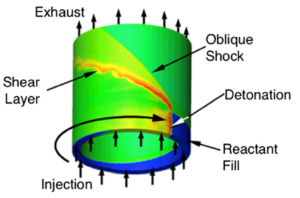
This work package evaluates the potential of hydrogen-fuelled Rotating Detonation Engines (RDEs) for future aerospace applications. Activities include CFD modelling, validation against experiments, and assessment of combustion and detonation models. The goal is to determine the feasibility and performance benefits of this highly efficient propulsion concept.
Expected Impact
The project will deliver validated CFD methodologies, improved understanding of hydrogen combustion and safety issues and valuable guidance for the development of future low-emission aircraft propulsion systems. The results will be documented in a final GARTEUR report produced jointly by all participating organisations.
Chair: Dr Ainslie French, CIRA
Co-Chair: Dr Xiaoxiao Sun, Cranfield
Monitoring responsable: Giuseppe Mingione, CIRA
Members: CIRA (ITA), Cranfield University (GBR), Cambridge University (GBR), CERFACS (FRA), ENEA (ITA), IMFT (FRA), INTA (ESP), Piaggio Aerospace (ITA), Politecnico di Bari (ITA), TU Darmstadt (DEU), University of Beira Interior (PRT)